

Mods Japan


When I think about Mods or Modernists, I generally see Mods as a British based subculture, originating in the late 1950s, peaking in the mid 1960s. Emerging from working class youth, who rejected post-war austerity, defined by Italian style suits, Vespa and Lambretta scooters, The Who, The Kinks, The Small Faces and The Spencer Davis Group. Think "Swinging London", Carnaby Street, London, not forgetting the Mod revival in the 1980s. Even though Mod is seen as a fundamentally, British based subculture, Modernist music style had its roots in American Jazz, R & B, and Jamaican Ska, these foundational sounds found themselves recycled by UK bands, who adapted these styles into their own music.
As a fashion designer, I am also interested in youth culture and style around the world, British culture, its fashion and its history have been influential to design around the world. As recent as 2023, Dior's Spring menswear collection took its inspiration from The Bloomsbury group painters. In 1995, Jean Paul Gaultier's collection featured Scottish tartans and kilts (yes, I know not "British"), but part of our heritage. Twice The Metropolitan Museum of Modern Art has put on exhibitions that were about British history, youth culture and fashion. Anglomania (2006), examined aspects of English culture that continues to capture the imaginations of Europeans and Americans. Punk: Chaos to Couture (2013), considered the vitality of the punk aesthetic and its impact on high fashion, from the do-it-yourself ethos of punks originators to its couture descendants. This made me think about how has Mod culture been adopted, even adapted by other cultures around the world, in particular, Japan. The following information has been taken from a number of sources, which I have cited in the bibliography, at the end of this blog. This blog post talks about how the Mod scene started in Japan, introduces the people who were pivotal to the scenes growth, and todays Mod scene. I could talk about the club scene e.g., Jam club, Tsubuki House, Whiskey A Go Go, Face, and music scene, The Collectors , that were unique to Tokyo Mods. For more information on these, see the bibliography (Tokyo Mods).
Japan : The Ivy League Style
Post-War Fashion
After World War II, Japanese fashion was highly influenced by Western dress, particularly from the United States. The American occupation of Japan (1945–1952) and the influx of mid-century Western media fundamentally reshaped Japanese fashion. American cultural exports, such as Hollywood movies and music, inspired the youth to adopt Western attire and accessories, giving rise to distinct subcultures.

In Japan, one of the main influences on men's fashion was The Ivy League (American Collegiate fashion). The "Ivy League look" in Japan, often called Ametora (American Traditional) or Japanese prep, was a reverent, detailed take on classic East Coast collegiate fashion. Unlike its casual American counterpart, Japanese Ivy was characterized by a devotion to authentic craftsmanship, perfectly tailored fits, Oxford cloth button down shirts, penny loafers, madras plaid and slim cropped chinos. There was even a youth tribe, a subculture, called the Miyuki-zoku, which got its name from the street they hung out in, Miyuki Street. Zoku is the Japanese name for tribe, clan or family. Have a read of the article, The Miyuki-zoku: Japan’s First Ivy Rebels, found at Ivy-Style.com.
"The Miyuki-zoku were devotees of classic American collegiate style. The uniform was button-down oxford cloth shirts, madras plaid, high-water trousers in khaki and white, penny loafers, and three-button suit jackets. Everything was extremely slim. The guys wore their hair in an exact seven-three part, which was new for Japan. They were also famous for carrying around their school uniforms inside of rolled-up brown paper grocery bags."
Even today, Japan keeps the Ivy League style alive and a number of brands are influenced by it. VAN store is a brand that is famous for promoting and cultivating the Ivy League style. Founded in 1948 by Kensuka Ishizu, VAN jacket introduced post-war Japan to Ivy League style, American collegiate fashion. In 1965, to prove that the style was authentically American, Ishizu and his team travelled to eight prestigious US universities to photograph and film the students. The resulting book, Take Ivy, served as a style bible for Japanese youth.
Take Ivy, photographs by T.Hayashida, published by Hatchette, Fujingaho Co., September, 1965
If you would like further information on how Japan promoted the Ivy League style, the following video is interesting, featuring Take Ivy.
Japan : Mod Style 1970s - 1990s
As already cited at the start of this post, Mod as a subculture, had its origins in the late 1950s, peaking in the mid 1960s, and had a revival in the late 1970's. This Mod revival, which emulated the aesthetic of the sixties, began in the United Kingdom, and as we shall see, it later spread to other countries, including Japan. This revival according to a number of sources, including Record Collector Magazine, was a backlash against the commercialization of punk rock. Young people felt disillusioned, and they wanted something different, their style moved away from the safety pin aesthetic, and they started to adopt a more sharper, polished look. All the articles, blogs, I have read, all agree that the film Quadrophenia was the catalyst that gave this underground movement momentum. This revival was also set in motion by The Jam and its followers. The band had adopted a mod look and mixed the energy of punk, with the sounds of 1960s British Pop (The Beatles, The Small Faces and The Who), American Soul, Motown and Classic Jazz.
The mod revival was also seen as a conscious effort to hark back to an earlier generation in terms of Mod style and presentation such as wearing 1950s-style US Army field parkas and riding Italian scooters. How did this Mod subculture, which was distinctly British, mange to establish itself in Japan? According to two Japanese on-line articles (The Rake Style Guide: The Mods of Japan and Sabukaro online: Rise of the Tokyo Mods; Manubo Kuroda), it was the film Quadrophenia (in Japan titled "Farewell to the Light of Youth"), that ignited the movement in Japan, connecting and getting the attention of like minded young men and women. Among them was a young man called Manabo Kuroda, who became a bit of a figurehead for the Japanese Mod scene. He, it seems, was a pivotal figure, when it came to organising Mod events.

In the article, Mods of Japan, it describes how a dedicated The Jam fanclub, organised its own version of the Mayday Mods meet up in Tokyo, 1980. Their Mods Mayday became an annual event. It was celebrated every May, and the first official one, held in 1981 in a small club in Kichijoji, was considered the birth of the Japanese Mod scene. In the article Tokyo Mods, it says that around 200 people attended. However, it wasn't until, Japanese Mod, Manabu Kuroda took the reins of Mayday in 1983, at the age of 20, that the Mods in Japan, became a actual subculture. It was also Manabu who introduced the annual scooter run, a tradition that began in 1984, and still exists today, similar to the scooter runs in Britain.
Images: Sussex World, Eddie Mitchell, April, 2023. B.S.R.A Website, 2025. Island Echo (Isle of Wight), Warren Whitmore, August 2023

The group behind Tokyo's Mayday, launched their own modzine in 1983, "Here Today", the idea was kicked off by Manabu and it became an important milestone in the subculture in Japan. It was created by Minako Watanabe, and it documented the rising Japanese Mod scene and underground fashion. The photographs revealed the biggest contrast to Britain. Since the Japanese scenesters were from middle-class, university-student backgrounds, they could afford to mix the Mod staples with colourful Punk accessories. I could not find an image of this magazine on the internet, however I did find examples of similar magazines that focused on Mod style.
These images of Mod Style magazines are from Popeye magazine and Check mate, 1990s publications.
It must be said, that there was already a thriving ready-to-wear clothing industry, partly due to economic growth and a global youth culture, that had its roots in Britain and America. Since World II, economic trends, a decline in heavy industry, the movement of capital into lighter forms of production eg., consumer goods, less skilled jobs and more flexible working hours. This had consequences on younger people, who were ideal candidates for this type of work, allowing them to have their own income, to spend how they wanted. By the late 50s there were more products that catered for "youth", this with the influence of music and films from America, helped cultivate a youth culture and a younger aesthetic in regards to fashion. This was also echoed across the world in other cities.
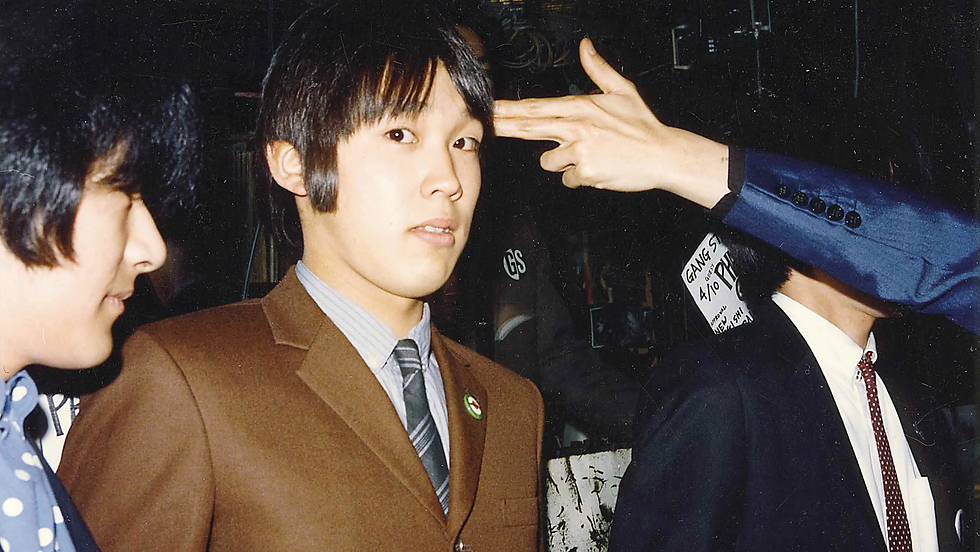
I mentioned at the beginning of this post that I would not write about the club or music scene, however, I do need to mention these, as I have realised, they were an integral part of Mod culture in Japan. Post, Here Today magazine, Manabu created the Radiate Records label. He gathered the important groups in the scene, such as, The Collectors, Mersey Beat and Page Three. The Collectors opened the legendary Shinjuku Jam Club, giving the scene a base to gather and dance. It still exists today but relocated from the Shinjuku party district, and re-opened as Nishi-Eifuku in Suginami, 2017.
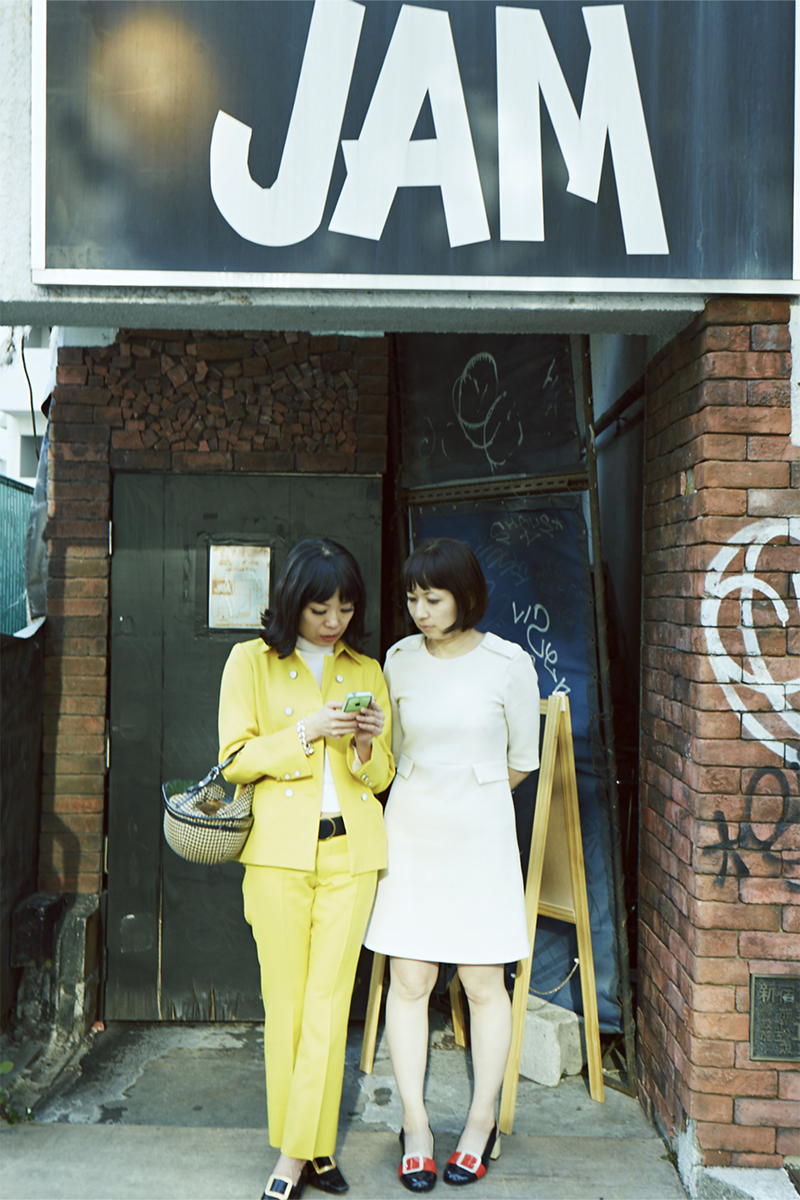
With more clubs and record labels starting across Tokyo, the Japanese Mods peaked by the nineties. Mods Mayday reached over fifteen-hundred participants in 1991. Although they were replaced by fashion streetwear trends and the new electronic music, at the turn of the century, there still exists a vibrant Mod scene in Japan. Social media has cultivated this, including people like Masana Mod, a prominent young Tokyo based designer, illustrator, and active participant in Tokyo's Mod subculture.

YouTube is full of videos that show various Mayday scooter runs, some are a bit long to have in this post, but I have posted this one as it is not too long, recent and gives you an idea what is worn by the riders.
There are a number of instagram accounts created by Japanese Mods, showing Mayday scooter runs, their social gatherings and modzines. I like the retro, do-it-yourself zine aesthetic.
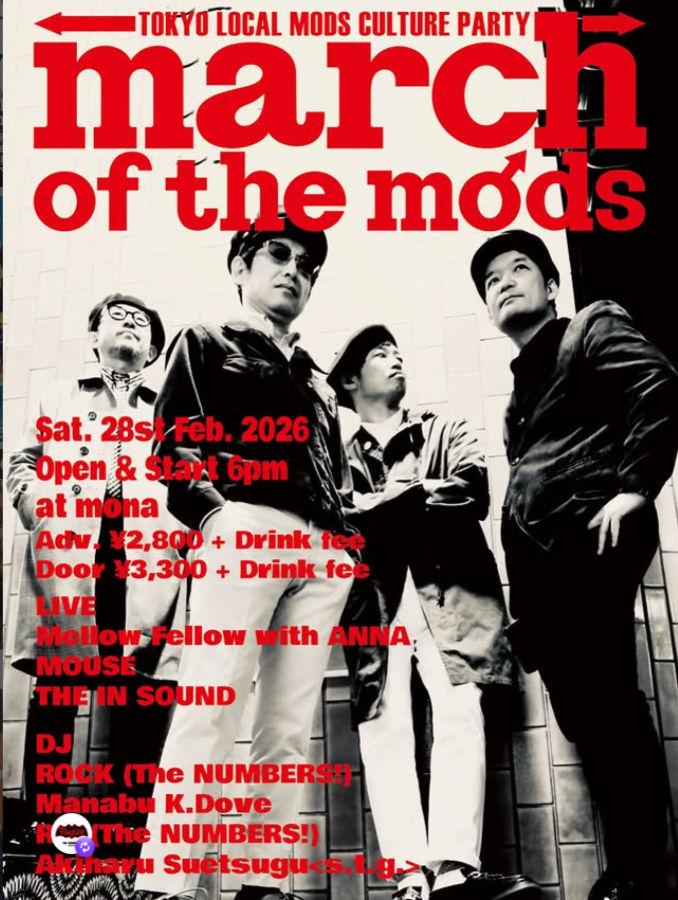

I hope you find this post interesting. It is a brief history of Japanese Mods, as a blog post I did not want it to be too long. I would have liked to feature photographs of current Mods, but apart from instagram, I could not find many. I have also tried to cite any images I have used, or at least referenced where the image is from.
If you are visiting this website from Japan, I would love you to contact me and share your photos. There is a contact form at the top of this page.
Bibliography
British Scooter Rallies Association
Marx, W. D., 2015. Ametora: How Japan Saved American Style. New York: Basic Books. 2015
A Distinctive Teenage World: The Rise of the Youth Market, Museum of Youth Culture, Bill Osgerby.
The Miyuki-zoku: Japan’s First Ivy Rebels, June 26, 2019
Mod Tokyo. A website that is about the Tokyo Mod Scene, featuring March of The mods Magazine and also a photo archive of recent events.
The National Arts Centre Tokyo
Fashion in Japan 1945-2020, June 9 (Wed), 2021 - September 6 (Mon), 2021
Japanese Mod Culture: from M-51 Parkas to to Italian Scooters, Sabukaru on-line, author and date unknown.
Tokyo Mods: How an English Youth Movement from the 60s Conquered Japan, Sabukaru on-line, author and date unknown.
The Rake Style Guide: Mods of Japan, author Chris Cotonon, October 2022
Scootering Magazine: Scootering Classics, Osaka Scooter Run, 2018
Scooter Boys 1980s The lost tribe of British youth culture, November, 2019
Take Ivy,
Hayashida. T., Take Ivy. Japan, Powerhouse Books, 1965
Riding Along with Tokyo's Modern Day Mods; An Interview with Manabu Kuroda, VICE Japan, by Keisuke Nagoshi, April 25th, 2017.
Tokyo Mods : How an English Youth Movement from the 60s Conquered Japan
Sabukaru, Leonel Martinez, edited by Mizuki Khoury.
Mod Revival


Comments